How Cloud Landing Zones Work: The Hidden Mechanics
A landing zone is not a template but a continuous enforcement loop that rewrites your cloud configuration to match policy every time it drifts.
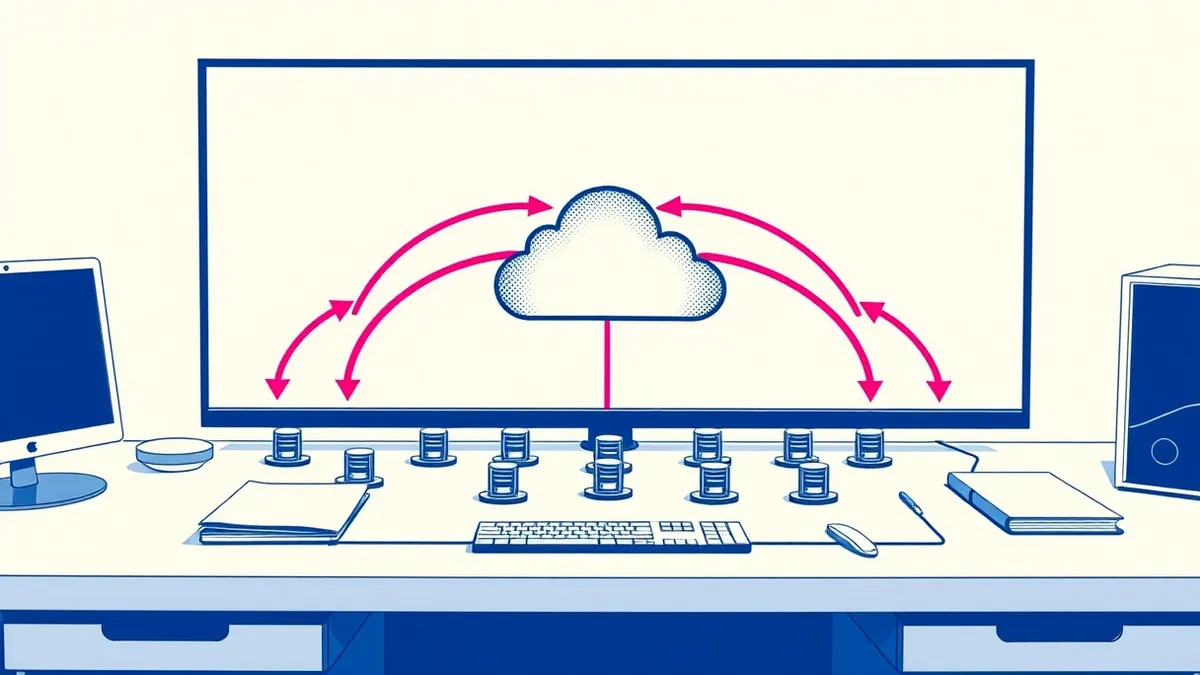
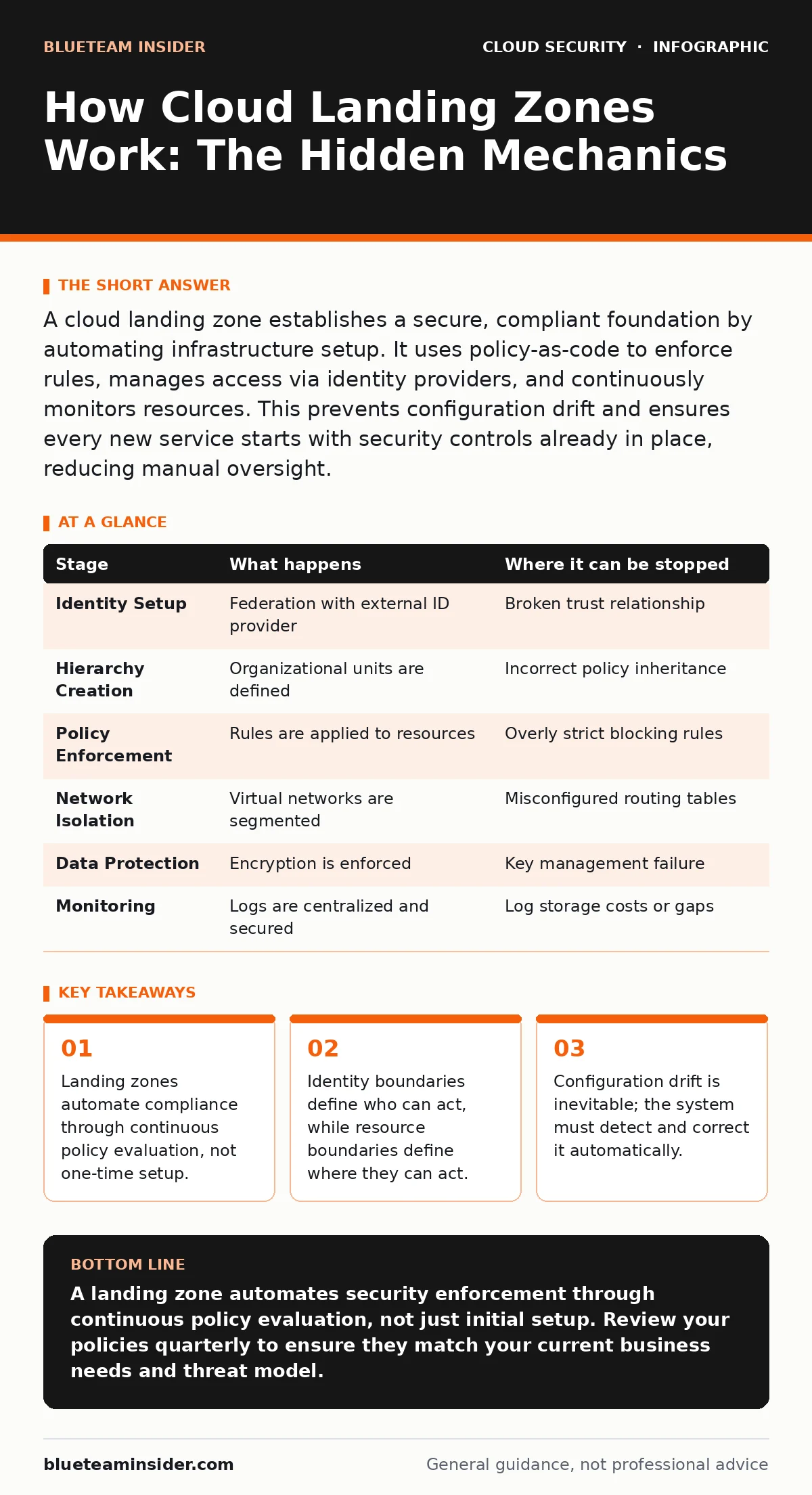
A cloud landing zone establishes a secure, compliant foundation by automating infrastructure setup. It uses policy-as-code to enforce rules, manages access via identity providers, and continuously monitors resources. This prevents configuration drift and ensures every new service starts with security controls already in place, reducing manual oversight.
The Foundation: Identity and Access Boundaries
You cannot secure a cloud environment if you do not first define who is inside it. The landing zone begins by establishing a strict identity perimeter. This is not about creating user accounts in the cloud provider’s directory. Instead, you connect the cloud to your existing identity provider. This allows the cloud to trust your corporate login system.
The mechanism relies on federation. When a user logs in, the cloud receives a token from your identity provider. This token contains claims, which are statements of fact about the user, such as their department or role. The cloud uses these claims to grant or deny access. If the token lacks the right claims, the request fails immediately.
This separation means you never manage passwords in the cloud console. You manage them in your primary directory. If an employee leaves, you disable their account there. The cloud access vanishes instantly. This reduces the risk of orphaned accounts, a common source of security gaps. For deeper context on access risks, see our guide on cloud privilege escalation.
The Architecture: Organizational Units and Hierarchies
Once identity is settled, you must structure the environment. Cloud providers use hierarchical structures to group resources. These groups are often called organizational units. You place resources into these units based on function, such as production, development, or finance.
The landing zone defines default policies for each unit. A policy is a rule that applies to all resources within a specific unit. For example, you might enforce a rule that all storage buckets in the production unit must be encrypted. If someone tries to create an unencrypted bucket, the system blocks it.
This hierarchical approach prevents configuration sprawl. You do not need to configure security for every individual resource. You configure it once at the group level. The system inherits these settings downward. This ensures consistency across thousands of resources. It also simplifies auditing, as you can verify compliance at the group level rather than the individual level.
The Enforcement: Policy-as-Code Mechanism
The core of the landing zone is the enforcement engine. This system evaluates your infrastructure against your defined policies. It does this continuously, not just when you make changes. This is critical because manual checks are easily forgotten.
The engine uses a push-pull model. It pushes new policies to the cloud environment. It pulls the current state of the infrastructure to check for compliance. If the state matches the policy, nothing happens. If there is a mismatch, the system flags a violation.
Some landing zones can automatically remediate violations. This means the system changes the resource to match the policy. For example, if a database is left open to the public internet, the system can close it. This automation is powerful but risky. You must define clear rollback procedures. If the system breaks a critical service, you need a way to restore it quickly.
The Network: Isolation and Traffic Control
Security is not just about access; it is about movement. The landing zone defines the network topology. This includes how different parts of your cloud talk to each other. You typically use virtual private clouds to isolate workloads.
Traffic between these isolated networks must pass through controlled checkpoints. These checkpoints can inspect traffic for threats. They can also enforce rules about which services can communicate. For instance, a web server might be allowed to talk to a database, but not to the internet.
This layer adds complexity. Misconfigured routes can isolate services unexpectedly. You must test network changes in a non-production environment first. The landing zone should include predefined network templates. These templates ensure that new environments follow the approved architecture. This reduces the chance of human error in network setup.
The Data: Encryption and Key Management
Data at rest must be protected. The landing zone enforces encryption standards for all storage services. This includes databases, file systems, and backups. You must decide who holds the encryption keys.
You can use keys managed by the cloud provider. This is easier but gives the provider access to your data. Alternatively, you can manage your own keys. This is more secure but adds operational overhead. For a detailed look at this trade-off, read our guide on bring your own key encryption.
The landing zone should default to the stricter option. It should require customers to provide their own keys for sensitive data. This ensures that even if the cloud provider is compromised, your data remains unreadable. It also helps meet strict regulatory requirements.
See also: Bot Management Misconceptions: What Cloud Security Teams Get Wrong · Cloud Detection and Response: 6 Misunderstandings That Leave You Exposed
The Monitoring: Continuous Visibility
You cannot protect what you cannot see. The landing zone sets up centralized logging. This includes audit logs, network logs, and application logs. These logs are sent to a secure, read-only storage location.
This storage must be immutable. This means logs cannot be deleted or altered. If an attacker gains access, they cannot cover their tracks by deleting logs. This preservation is vital for incident response. It allows you to reconstruct events after a breach. For procedures on handling such events, see cloud incident response.
The system also sets up alerts for suspicious activity. These alerts are based on predefined thresholds. For example, an alert might trigger if a user logs in from a new country. This helps you detect anomalies early. You must tune these alerts to reduce noise. Too many false positives lead to alert fatigue.
| Stage | What happens | Where it can be stopped |
|---|---|---|
| Identity Setup | Federation with external ID provider | Broken trust relationship |
| Hierarchy Creation | Organizational units are defined | Incorrect policy inheritance |
| Policy Enforcement | Rules are applied to resources | Overly strict blocking rules |
| Network Isolation | Virtual networks are segmented | Misconfigured routing tables |
| Data Protection | Encryption is enforced | Key management failure |
| Monitoring | Logs are centralized and secured | Log storage costs or gaps |
The Limits: Drift and Complexity
A landing zone is not a one-time project. It is a living system. Configuration drift is the natural tendency of systems to diverge from their intended state. This happens when users make manual changes or when new services are deployed outside the standard process.
The landing zone must detect and correct this drift. However, it cannot prevent all changes. Some legitimate changes require temporary exceptions. You need a process for managing these exceptions. Without it, the system becomes a bottleneck.
Complexity is the hidden cost. Managing policies, hierarchies, and exceptions requires specialized skills. You must invest in training. You must also regularly review your policies. Outdated policies can block necessary work. They can also create false sense of security. For a broader view of these risks, see cloud security assessments.
The Future: Continuous Improvement
The cloud landscape changes rapidly. New services are released constantly. Your landing zone must adapt. You should review your policies quarterly. You should test your enforcement mechanisms regularly.
Automation is your best friend. Use scripts to deploy and test changes. This reduces human error. It also speeds up response times. If a new threat emerges, you can update your policies and deploy them quickly.
This continuous improvement cycle ensures your security remains effective. It turns the landing zone from a static template into a dynamic defense. You must treat it as a core part of your security operations. It is the foundation upon which all other security measures rest. For related context on data integrity, see cloud audit logs.
Key takeaways
- Landing zones automate compliance through continuous policy evaluation, not one-time setup.
- Identity boundaries define who can act, while resource boundaries define where they can act.
- Configuration drift is inevitable; the system must detect and correct it automatically.
A landing zone automates security enforcement through continuous policy evaluation, not just initial setup. Review your policies quarterly to ensure they match your current business needs and threat model.
Frequently asked questions
Does a landing zone prevent all cloud breaches?
No, it enforces configuration standards but does not patch software vulnerabilities or stop targeted attacks on individual users.
How long does it take to set up a landing zone?
Initial setup can take weeks, but ongoing maintenance is continuous. Complexity depends on your existing infrastructure and policy strictness.
Can I use a landing zone for hybrid cloud environments?
Yes, but you must extend the policy enforcement to on-premises resources, which often requires additional tools and integration.
What happens if a policy blocks a critical business operation?
You must have an exception process. This allows temporary overrides with strict approval and time limits to restore functionality.
How this guide was produced: written by the BlueTeam Insider editorial team with AI assistance, checked against the public references listed below, and reviewed when the facts change. See our editorial policy or report an error.