Tax Identity Theft: How to Detect, Stop and Recover
Your tax return can be filed before you know your data was stolen, locking you out of your own refund and creating a long trail of fraud.

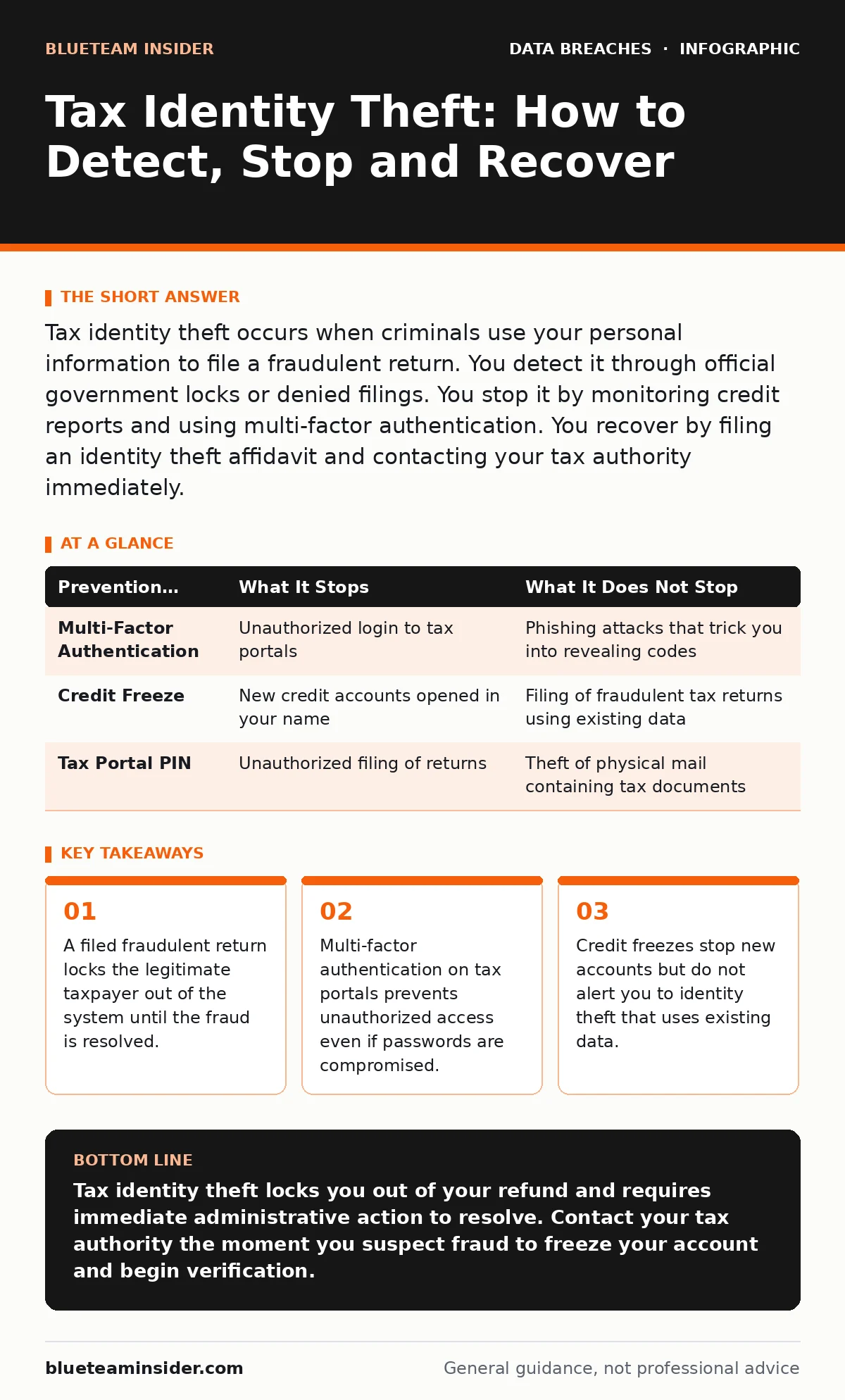
Tax identity theft occurs when criminals use your personal information to file a fraudulent return. You detect it through official government locks or denied filings. You stop it by monitoring credit reports and using multi-factor authentication. You recover by filing an identity theft affidavit and contacting your tax authority immediately.
What is tax identity theft?
Tax identity theft is the unauthorized use of your personal information to file a fraudulent tax return or claim a refund. Criminals steal names, Social Security numbers, and banking details to impersonate you. They file returns before you do, claiming refunds to accounts they control. This fraud relies on the fact that tax authorities process returns in the order received. The thief acts first, leaving you with a rejected filing and a frozen account.
How do criminals get my tax information?
Thieves obtain data through phishing emails, malware, or physical mail theft. They may also buy stolen records from data breaches. Imagine a scenario where a criminal intercepts your W-2 form in the mail. They extract your employer identification number and income details. With this data, they craft a plausible return. They do not need your password if they have your full name and Social Security number. Physical mail remains a primary vector for this type of fraud.
How will I know if my tax identity was stolen?
You will know when you attempt to file your return and the system rejects it. The tax authority will state that a return was already filed using your identification number. You may also receive an IRS notice about errors on a return you did not file. These notices arrive by mail and often cite discrepancies in income or dependents. Do not ignore these letters. They are the primary alert mechanism for this specific type of fraud.
What happens when I try to file after theft?
The filing system locks your account to prevent duplicate claims. You cannot file your legitimate return until the fraud is resolved. This creates a delay that can last weeks or months. During this time, you must prove your identity to the tax authority. The burden of proof falls on you, not the criminal. You must submit forms to verify your address, identity, and income. This process is administrative and requires patience and accurate documentation.
How do I prove I am the real taxpayer?
You must file an Identity Theft Affidavit with the tax authority. This form declares that you did not file the fraudulent return. You must also provide proof of identity, such as a driver’s license or passport. The tax agency will verify your information against their records. They may require you to visit a local office in person. Bring original documents, not copies. The verification process ensures that the person claiming the refund is the true owner of the tax identification number.
See also: Breach Dwell Time: Reduce Exposure With 3 Proven Tactics
Can I prevent tax identity theft completely?
No measure guarantees complete protection, but you can significantly reduce risk. Use multi-factor authentication on your tax portal account. This adds a second layer of security beyond your password. Monitor your credit reports for unusual activity. Consider a credit freeze, which prevents new accounts from being opened in your name. However, a freeze does not stop thieves from using your data to file taxes, as they do not open credit lines. It stops the financial damage that often follows identity theft.
| Prevention Measure | What It Stops | What It Does Not Stop |
|---|---|---|
| Multi-Factor Authentication | Unauthorized login to tax portals | Phishing attacks that trick you into revealing codes |
| Credit Freeze | New credit accounts opened in your name | Filing of fraudulent tax returns using existing data |
| Tax Portal PIN | Unauthorized filing of returns | Theft of physical mail containing tax documents |
Does cyber insurance cover tax identity theft?
Most personal cyber insurance policies exclude tax-related fraud. They typically cover data breaches at businesses, not individual identity theft. Some policies offer limited reimbursement for recovery costs, such as legal fees or lost wages. Check your policy wording carefully. Look for exclusions related to "government benefits" or "tax refunds". If you are a business, check your policy for coverage of employee tax identity theft. This is a specific exclusion in many standard policies.
How long does recovery from tax fraud take?
Recovery is slow and depends on the complexity of the case. Simple cases may resolve in a few weeks. Complex cases with multiple fraudulent returns can take months. The tax authority must investigate the fraud, verify your identity, and process your legitimate return. You may need to file amended returns for previous years if the thief filed those as well. Patience is required during this period. Keep all correspondence and reference numbers. Follow up regularly to ensure the case is moving forward.
What steps should I take immediately after discovery?
Act quickly to limit further damage. First, contact your tax authority to report the fraud. Request a lock on your account. Second, place a fraud alert or credit freeze with credit bureaus. This stops thieves from opening new accounts. Third, monitor your bank statements for unauthorized transactions. Thieves often use the same data for multiple crimes. Reporting the theft creates a paper trail that helps financial institutions reverse fraudulent charges.
How do I protect my family from tax theft?
Criminals target families because dependents generate additional refunds. Secure your children’s Social Security numbers. Do not share them unnecessarily. Monitor your tax transcripts for unexpected dependents. If you see a child listed who is not yours, report it immediately. Educate family members about phishing scams. They may receive emails asking for tax information. Treat any unsolicited request for personal data as suspicious.
Why is oversharing on social media dangerous for tax security?
Social media profiles often contain birthdates, pet names, and home addresses. Criminals use this information to answer security questions. They may also identify family members to file dependent claims. Suppose you post a photo of your new baby’s birth certificate. A criminal can extract the child’s Social Security number from the image. They then file a return claiming that child as a dependent. Limiting public information reduces the data available for social engineering attacks.
How does identity theft protection help with tax fraud?
Identity theft protection services monitor your personal data for suspicious activity. They alert you if your Social Security number appears on dark web markets. Some services offer tax-specific monitoring. They check for filings associated with your identity. This proactive monitoring can detect fraud before you attempt to file. However, these services are not foolproof. They rely on data feeds and may miss small-scale fraud. Use them as one layer of defense, not a complete solution.
Key takeaways
- A filed fraudulent return locks the legitimate taxpayer out of the system until the fraud is resolved.
- Multi-factor authentication on tax portals prevents unauthorized access even if passwords are compromised.
- Credit freezes stop new accounts but do not alert you to identity theft that uses existing data.
Tax identity theft locks you out of your refund and requires immediate administrative action to resolve. Contact your tax authority the moment you suspect fraud to freeze your account and begin verification.
Frequently asked questions
Can I file my taxes online if my identity was stolen?
No, you must wait until the tax authority resolves the fraud and unlocks your account. You may need to file by mail during this period.
Do I need to pay taxes on the fraudulent refund?
No, you are not responsible for taxes on refunds you did not receive or claim. The fraud is attributed to the criminal, not you.
How do I remove a fraudulent dependent from my return?
File an amended return and include an Identity Theft Affidavit. Explain that the dependent was added without your consent.
Will my credit score drop due to tax identity theft?
Tax fraud itself does not affect credit scores. However, if thieves open credit accounts in your name, those will impact your score.
How this guide was produced: written by the BlueTeam Insider editorial team with AI assistance, checked against the public references listed below, and reviewed when the facts change. See our editorial policy or report an error.